

From Lab to Fab: Quantum Sensing and NV Control
Publish date:
23. February 2026
Category:
Author:
How do quantum sensing technologies move from lab experiments to scalable systems? Experts from SAL and IJS share lessons on engineering, timing, and integration.
From Lab to Fab: Quantum Sensing and NV Control
Speakers
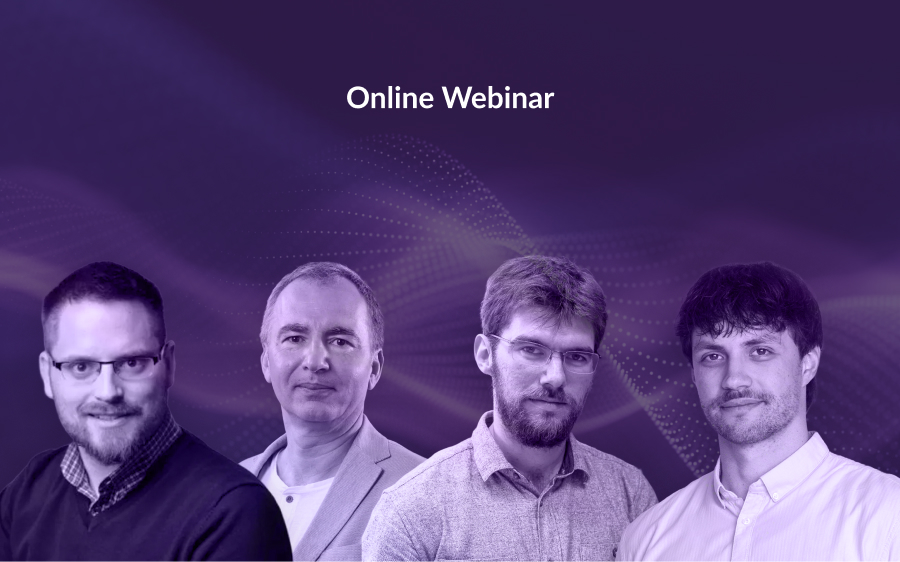
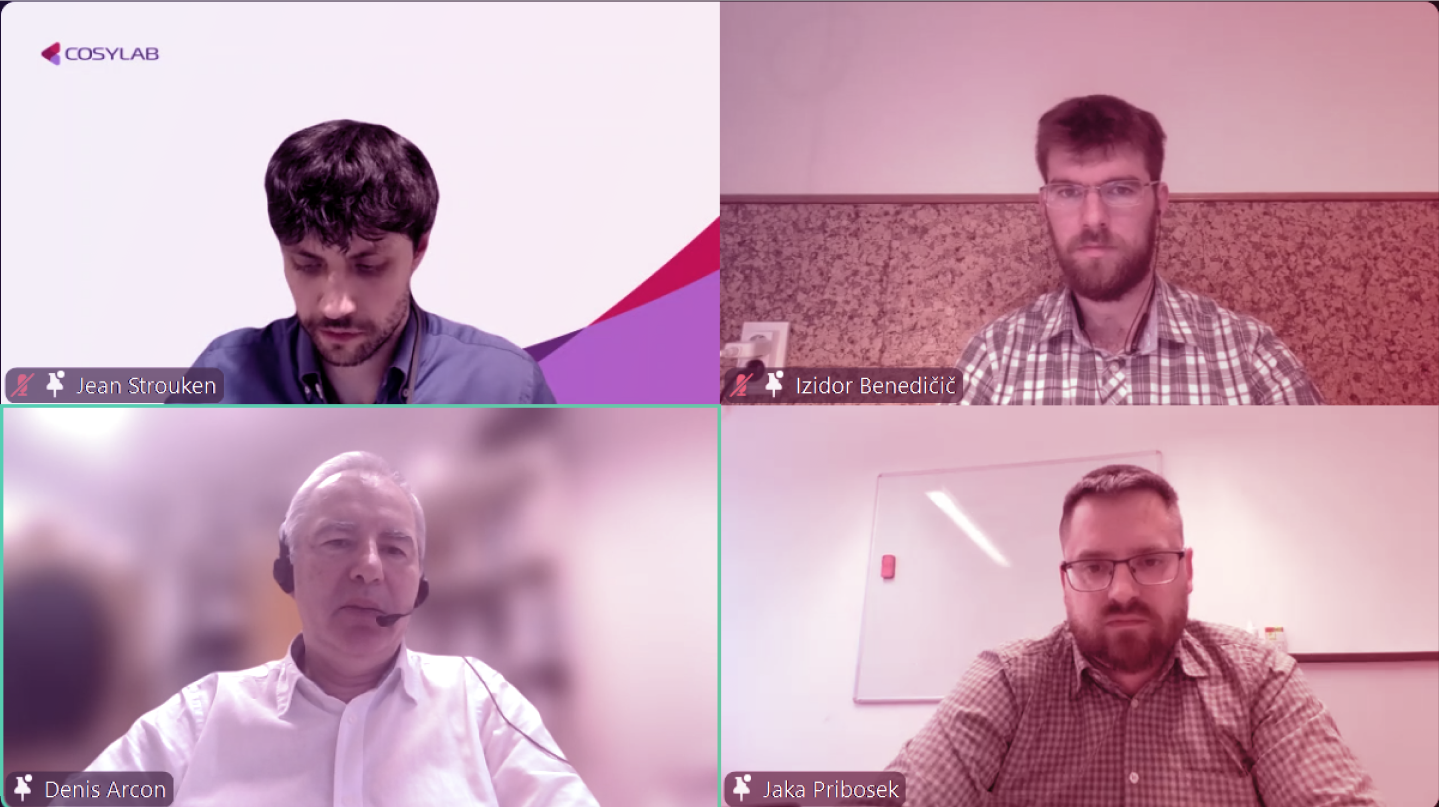
Dr Jaka Pribošek, Prof. Dr Denis Arčon, Dr Izidor Benedičič, Jean Josef Strouken
Quantum Sensing and NV Control
Quantum sensing is rapidly improving at the physics level; yet promising technologies get stuck when the lab prototype has to be converted to deployable, scalable, and reliable technology; an engineering problem.
We hosted a webinar on Feb 4th 2026, to bring together researchers from Silicon Austria Labs (SAL) and the Quantum Lab at the Jožef Stefan Institute (IJS) to investigate the transition from laboratory prototypes to real-world systems.
The webinar showed that early and systematic engineering input during synchronisation, timing and system integration may be the difference between a fragile demonstration of a technique and a reproducible, product-ready system.
Why Does the Lab-to-Fab Transition Matter?
Quantum sensing, computing, and communication are advancing rapidly. Researchers around the globe are demonstrating impressive capabilities with NV (nitrogen vacancy) centres, including NV centre-based vectorial magnetometers for biosensing, bench-top NMR spectrometers, and high-fidelity quantum gates.
When the webinar audience was asked to identify their most significant risk factor in scaling experiments, “consistency of results” was cited by the majority of respondents. Dr Jaka Pribošek of SAL stressed that typical quantum sensing systems require multidisciplinary research.
While it is critical to consider all aspects of a complex technical problem to develop an effective solution, the time and resources available to accomplish this are frequently insufficient.
"Often, you simply do not have enough time or resources to do that and therefore often the resulting system is less-than-optimal and produces inconsistent results difficult to reproduce."
This observation set the tone for the conversation. Typically, quantum teams lack sufficient control engineering resources to integrate timing, RF/MW generation, firmware, DAQ, and software into a coherent, reliable system.
A holistic engineering approach to provide a comprehensive hardware platform for quantum applications would significantly reduce these problems.
Lessons from Nature’s Quantum Navigators
Dr Pribošek delved into how migratory birds, such as the European Robin, have travelled thousands of kilometres over open ocean for hundreds of thousands of years using quantum mechanics.
Researchers have discovered that a light-sensitive protein in the robin’s eye enables a chemical reaction that produces an electron pair in a quantum state highly responsive to magnetic fields, providing the robin with a biological compass.
This is impressive since the quantum state produced is quite stable, which is hard to achieve even with advanced laboratory equipment.
According to Dr Pribošek, this biological system operates near the quantum energy-resolution limits, measuring both the magnitude and direction of Earth’s magnetic field, and represents an “extremely high performance” sensor perfected by evolution.
It is believed that similar biological mechanisms may be present in some species of turtles, fish, and whales. Nature has thus already developed efficient quantum sensors that work at room temperature, and the engineers’ challenge is now how to replicate this functionality in solid-state systems.
A Holistic Approach to Precision Navigation with Quantum Gyroscopes
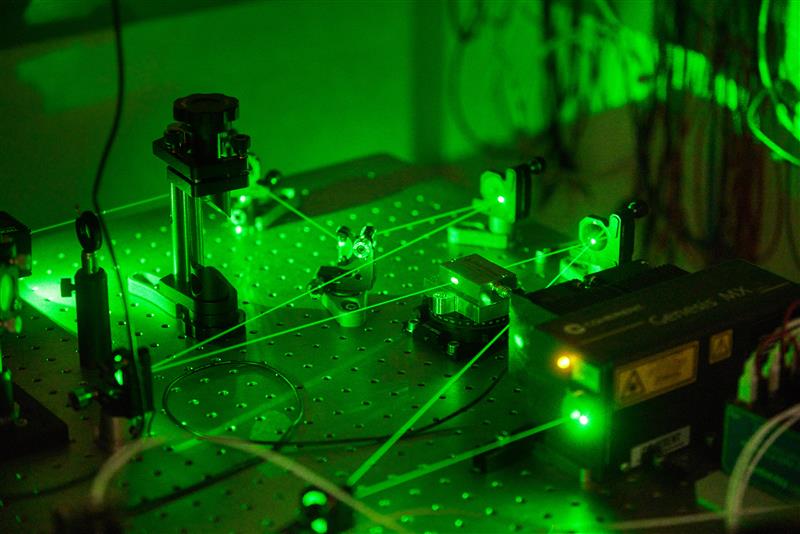
Quantum gyroscopes are a new generation of precision navigation systems, significantly smaller and more accurate over time than fibre-optic or ring-laser gyroscopes. The approach by Dr Pribošek and his team involves creating defects within the diamond crystal lattice, called NV centres.
These consist of a vacancy created when a nitrogen atom replaces a carbon atom, leading to a unique electronic configuration – a spin-1 system consisting of a ground and excited state triplet accessible through optics.
Because their properties can be manipulated by light and they maintain stability at ambient temperatures, NV centres are also the leading quantum sensing technology today and a widely used platform for quantum experiments.
To sense rotations, researchers at SAL apply a specific magnetic field to enable interaction between electrons and nuclear spins in the NV centre, thereby enabling the detection of even tiny rotational motion.
The precision is impressive: the technique has been able to detect rotations as small as 10 microradians per second in real-world applications, much better than most other techniques. However, achieving the highest theoretical performance requires teams solving multiple challenges across various engineering fields simultaneously.
Among them are:
- crystal engineering to ensure long coherence times;
- state-of-the-art design of quantum control electronics;
- superior optical excitation/detection systems;
- efficient photonic packaging to reduce volume;
- a good microwave antenna design to deliver a homogeneous field;
- magnetic subsystem optimisation (which SAL implements using an in-house developed library MagPyLib).
“All components are interconnected in this holistic approach to achieve an optimal system,” says Dr Pribošek.
Currently, the researchers use proprietary quantum control electronics based on RFSoC (Radio Frequency System-on-Chip), which remains a limiting factor for miniaturisation.
Their roadmap is to scale down the electronics to the chip-level in addition to further hardware miniaturisation, while closing the gap between current performance and the theoretical limit.
Compared with existing technologies, there are obvious differences. Both fibre-optic and ring laser gyroscopes perform well, but their performance improves with the loop area of the fibre coils, making miniaturisation impossible.
MEMS gyroscopes are, on the other hand, small but exhibit large drifts, which do not allow for navigation. NV-based systems can potentially deliver advanced navigation-grade performance at MEMS scale, thus filling a gap that none of today’s technologies address.

NV Centres in academic research: A quantum sensor coming of age
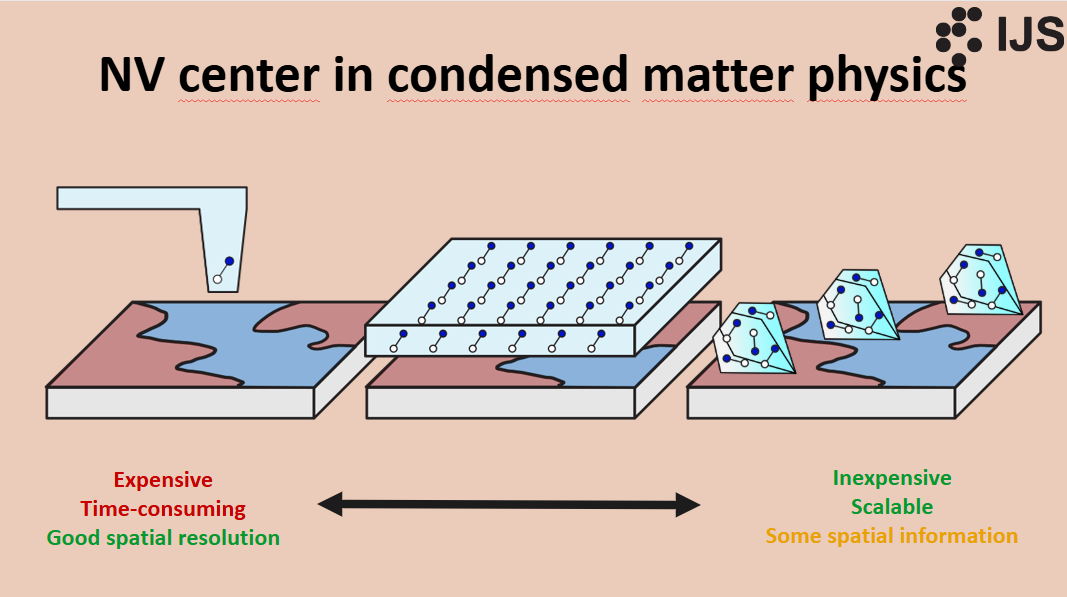
Dr Izidor Benedičič from the Jožef Stefan Institute explains another aspect: NV centres in nanodiamonds can act as local probes for condensed-matter physics. There are several reasons why nitrogen vacancy (NV) centres have become so popular among physicists for fundamental research into the microscopic magnetic properties of materials.
They are highly versatile, operating over a broad range of conditions, such as room temperature and ambient pressure. Furthermore, they provide quantitative data, allowing researchers to assign precise magnetic field values to specific measurements.
Most importantly, NV centres are local, meaning they are only responsive to magnetic fields generated within a few nanometers of the NV centre. However, challenges persist. NV centres are indirect probes, meaning researchers always work with them embedded in a particular diamond.
Therefore, it is necessary to carefully consider the diamond’s inherent properties and how it couples with the environment. If the NV centre couples too strongly to the environment, coherence times decrease; if it couples too weakly, it becomes less sensitive.
In addition, readout efficiency and other experimental parameters need to be optimised. According to Dr Benedičič, finding the right balance among all these factors is an ongoing task; however, the potential rewards of using NV centres justify the effort.
"NV centres really seem like a gift"
To illustrate, researchers at IJS demonstrated they could measure magnetism in a material called manganese-doped calcium iron oxide. This was synthesised at very high pressures and had previously been impossible to grow into a traditional single-crystal form.
These measurements were performed by placing 40-nanometer-wide diamond sensors on the surface of the material containing NV centres. The latter are highly sensitive to magnetic fields and therefore function as local magnetic field sensors. The results were excellent; as the team cooled the sample through its magnetic transition temperature, the
sensors detected sharp changes in the local magnetic field, consistent with the predicted phase transitions of this material.
This represents the first demonstration of using nanodiamond-based quantum sensors to characterise unknown materials, something researchers have long suggested but had not realised in practice until now.
What Were the Discussion Highlights?
A recurrent theme emerged during the panel discussion: the need for experts with experience across multiple areas of physics (microfabrication, microwave engineering, optics) and software engineering.
These disciplines have historically developed independently of one another, which presents a significant challenge for creating effective quantum sensing systems. Developing a sufficient working knowledge of related disciplines will remain a significant barrier to collaboration among experts until those disciplines become more established.
Prof Arčon discussed why his group decided to begin research into the NV field, after having used nuclear magnetic resonance (NMR) and electron paramagnetic resonance (EPR) for decades to investigate quantum materials and superconductors.
They now encounter instances where the standard NMR or EPR probe has proven inadequate. In particular, traditional techniques lack the sensitivity needed to study the magnetic properties of thin-film samples (less than 100 nm thick) or monolayers, and it is here that the use of quantum sensors becomes necessary.
Drawing on historical perspectives, Prof Arčon compared the development of NV-centre technology with that of NMR.
He noted that it took roughly 30 years after the end of the Second World War for NMR technology to reach maturity and become useful for applications such as medical imaging.
“I feel that with nitrogen-vacancy centres we are probably over there now. The methods and knowledge are mature enough to penetrate the market fully,” he said.
Dr Pribošek spoke of the “valley of death” that commonly exists between academic funding and industrial support for projects. While there are many technological barriers to overcome when transitioning from a laboratory prototype to an industrial project, economic considerations can pose additional challenges.
When questioned about the importance of microwave control, magnetic systems, and crystal engineering, Dr Pribošek emphasised that all three are essential for determining overall system performance, and that the interplay among the three areas determines the quality of the entire quantum navigation system.
However, if forced to choose an area with the greatest advancement potential, he singled out crystal engineering. He emphasised that, ultimately, the system’s success depends on the quality of the crystal. No amount of engineering can replace the loss of coherence that occurs in a poorly engineered sample.
What Lies Ahead for Quantum Sensing
Quantum sensing is advancing rapidly, and all three researchers agree that nitrogen-vacancy centres are among the best candidates for large-scale industrialisation. A major advantage of theirs is that they can be operated at room temperature and possibly miniaturised for integration on a chip, which distinguishes NV centres from other quantum sensing technologies that require ultra-high vacuum or cryogenic conditions.
Dr Pribošek believes that there will be a significant industrial uptake of quantum sensing using NV centres in the near future. “I believe the community has finally reached the point where we can scale this up, so I think this is going to happen in the next couple of years.”
"This is absolutely fantastic; it is really great to have such good technology like NV centres to work with, and the physics is ready now, as well as the engineering capabilities."
The message for research teams and start-ups looking to participate in this transition is that the physics is ready. However, they now have to build the engineering ecosystem needed to support the reliable, scalable deployment of these systems beyond the lab.
Is your quantum project at an engineering crossroads?
Contact us. Cosylab’s quantum engineering team works with start-ups and research teams to overcome the integration, timing and control barriers between laboratory breakthroughs and real-world applications.
View the webinar and the Q&A with our expert panel
About the Panellists
Dr Jaka Pribošek is the leader of the Applied Quantum Sensing Team at Silicon Austria Laboratories (SAL), Austria. He has a research background from the Technische Universität München and the Institute of Micro- and Nano Technologies at the Technische Universität Ilmenau. His current research includes solid-state spin-defect physics, quantum metrology, and quantum navigation, especially the GIRAFFE quantum gyroscope project.
Professor Dr Denis Arčon is a full professor at the Faculty of Mathematics and Physics, University of Ljubljana, and the Head of the Solid State Physics Department at the Jožef Stefan Institute (IJS). Prof. Arčon is experienced in conducting research in quantum physics. He has a special interest in magnetic resonance techniques to investigate quantum materials and superconductors.
Dr Izidor Benedičič is a researcher at the IJS working on NV centre experiments. His main areas of interest include issues related to the reproduction and synchronisation problems in quantum sensing applications, with practical experience in the design and maintenance of reliable experimental systems in academic settings.
Jean Josef Strouken, the webinar host, is the Strategic Account Manager for Quantum at Cosylab.
Subscribe to Our Quantum Newsletter
Stay informed about the latest developments in quantum sensing, computing, and engineering.
Get expert insights, research updates, and industry trends delivered to your inbox.
Get expert insights, research updates, and industry trends delivered to your inbox.