
Relieve Overloaded Engineering Teams
Publish date:
22. June 2026
Category:
Author:
This blog will examine the systemic pressures (structural overloads) that limit productivity and illustrate how proper engineering design can alleviate some of those pressures through a real-world example of upgrading a control platform.
Relieve Overloaded Engineering Teams
Semiconductor manufacturing teams have been under increasing pressure to add more feature functionality, improve performance, and enhance fab interface capabilities, all within the same time frame for each product release.
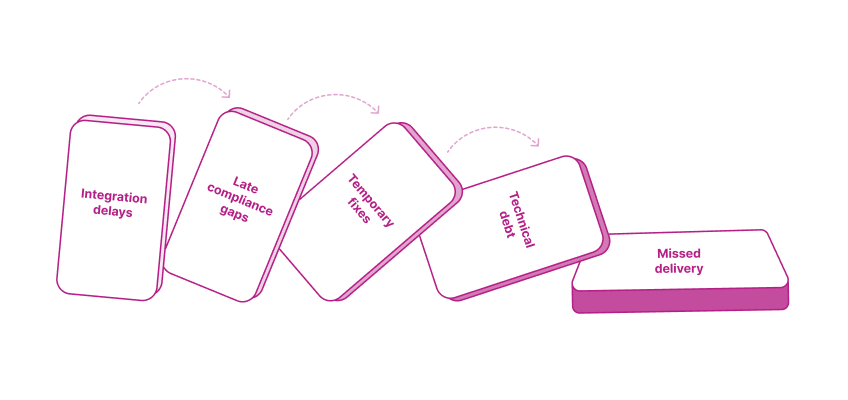
The SEMICON Europa 2025 industry survey we conducted confirms what most controls and software team leaders already understand: the bottleneck is not necessarily the amount of work being generated but the level of “coupling” or relationship between tasks.
When a task, such as modifying a motion control, affects the safety of the tool, improving a connectivity component impacts the overall architecture.
Furthermore, limited engineering bandwidth within the internal team, coupled with demanding hiring processes for additional controls talent, exacerbates the problem.
This blog will examine the systemic pressures (structural overloads) that limit productivity and illustrate how proper engineering design can alleviate some of those pressures through a real-world example of upgrading a control platform.
Control and software lead engineers have typically seen the issue before their organisation identifies it as “integration archaeology”.
This is essentially about discovering behaviour from previous assumptions (typically undocumented) and the past experiences (tacitly known) of engineers who have since left the organisation. However, the organisation’s roadmap continues to call for new feature implementation, tighter performance, improved fabrication interfaces, and improved data paths, all within the same release cycle.
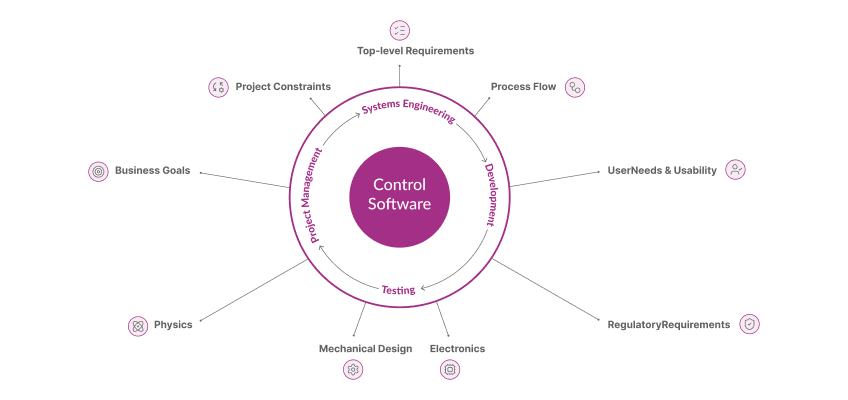
Survey respondents described this scenario as both a function of increasing system complexity and limited automation capability. It is not that there is too much work; it is that the work has a high degree of coupling. One cannot modify motion without understanding machine protection, or improve connectivity without affecting the architecture.
One cannot improve process automation without reliable observability, accurate time synchronisation, and the ability to manage states in a disciplined manner.
In extreme cases, a control system may behave differently depending on the day, the operator, or the specific sequence of actions that occurred previously. This makes root cause analysis difficult and unpredictable.
Start from the beginning
To better understand the challenges discussed here, we recommend reading Part 1 of this three-part series.
An example of modernising an X-Ray Lithography Platform
Without Breaking What Works
Here is a specific example from a Cosylab X-ray lithography platform upgrade. The customer’s rationale was simple: the parts of the legacy control stack were nearing the end of their life, and the team needed a modernised replacement that would not compromise accuracy or disrupt the tool’s daily operations.
This was not a green field design effort. Rather, it was a carefully designed evolutionary approach that sought to maintain known good behaviours while replacing components of the control stack that had become delivery risks.
The project’s constraints were many. The project’s timeframe was measured in months, not years. The requirement for backwards compatibility arose from operators’ and downstream workflows’ reliance on established behaviour.
Opportunities to test on the actual machine during development were limited, and our team could not simply try things out on the hardware until something worked.
There was also no complete formal design package that could simply be implemented, and the requirements had to be recovered from use cases, real operational sequences, and the realities of how the tool was being utilised.
The approach that worked for our team was to minimise uncertainty early, before commissioning, and to maintain modularity in responsibilities. We held use-case discussions with the customer’s team to recreate what the tool needed to perform, including edge cases and failure scenarios that did not appear in a “happy path” description.
Using a simulation environment, we simulated the critical aspects of the hardware, enabling us to verify the logic and interfaces without continuous access to the machine.
A modular machine protection subsystem was developed around a new PLC-based architecture that served as the interface layer for protected devices (valves, gauges and pumps) and enforced safe logical boundaries for those devices.
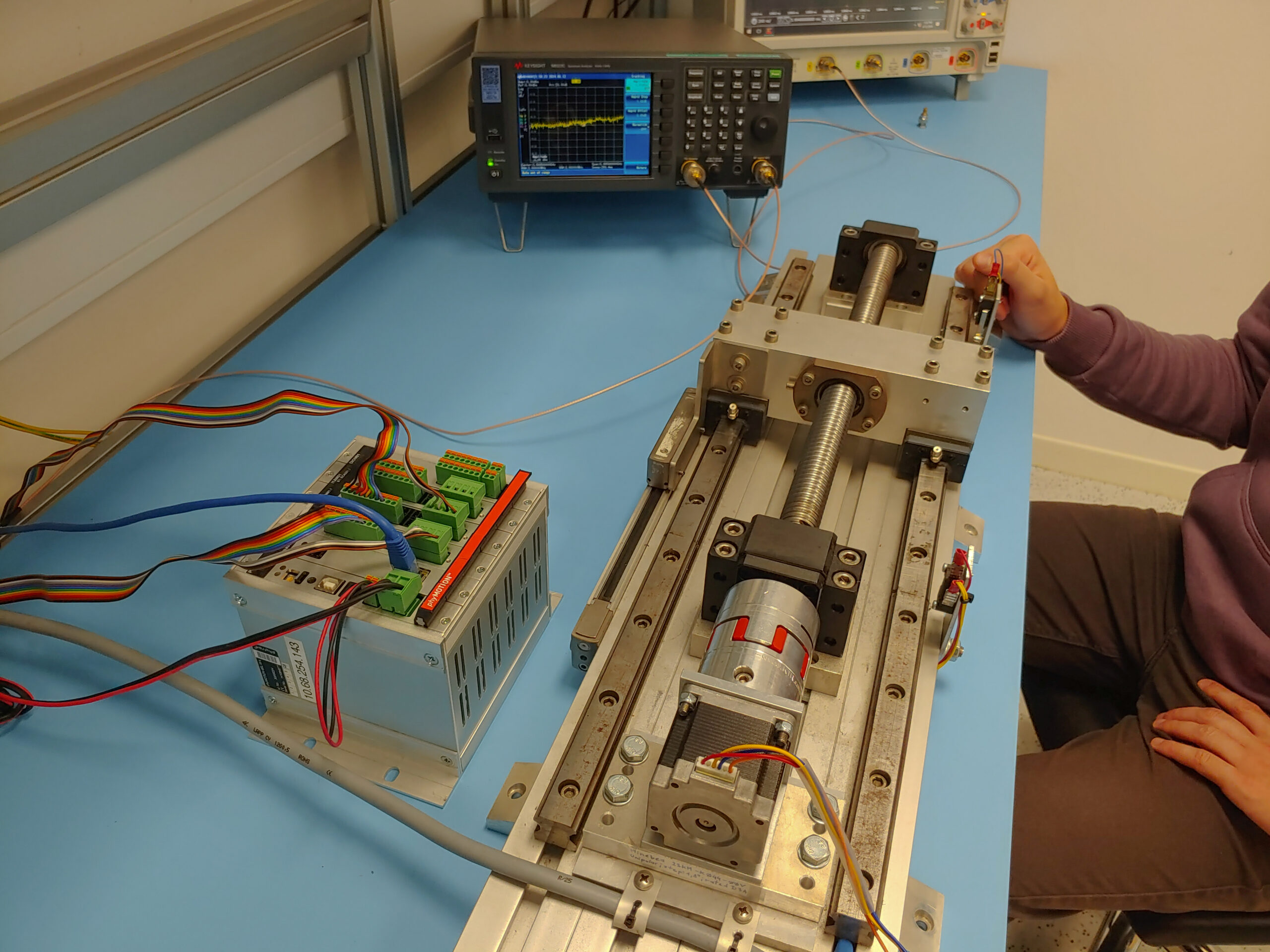
At the same time, the motion replacement was integrated into the existing control environment, including upgrades and refactoring in portions of the EPICS-based control system to accommodate the new motor controller.
During commissioning, we focused on validating the correct operation of the real motors, verifying the timing and state coordination, and confirming that the exposure sequence performed as expected under actual operating conditions.
Unlike discovering significant differences between the simulated and actual systems during commissioning, the commissioning effort validated a system that had already been tested and exercised through simulation, interface testing, and planned integration.
"Cosylab is building upon its extensive know-how of advanced control systems for precision and delicate instruments in the semiconductor industry.
Our engineers assist equipment manufacturers in devising precise, reliable, and integrated metrology and inspection tools.
Through close collaboration with customers, Cosylab reduces development risks and brings new expertise to accomplish complex projects."
For controls leads and architects, the key takeaway is not necessarily how to choose the best technology, but how to organise the work.
When your team is overwhelmed, the greatest leverage often comes from reducing specialised integration-oriented engineering while maintaining architecturally owned responsibility. The partnership needs to be structured so you don’t create a second integration challenge, but rather reduce the degree of coupling in the system.
In practice, that means defining clear subsystem boundaries and treating interfaces as primary deliverables.
Additionally, ensure that the integration is validated and confirmed at every opportunity, and not delayed or deferred. If done properly, this allows your core engineers to operate with sufficient space to continue pushing innovation toward roadmap objectives, rather than spending their cycles resolving integration issues and fighting fires during commissioning.
The trend we see in our SEMICON EUROPE 2025 Survey is consistent: when subsystems are well-defined, interfaces are treated as deliverables, and integration is validated at each step.
As such, engineering teams will again be able to devote time to innovation in their roadmaps rather than dealing with emergencies.
For controls leads and architects who oversee semiconductor tool complexity and are looking for an advantage, it is not merely about the technology used to develop their solution. It is also how they organise the development process so that integration does not become another problem to address.
Next things to read
Read additional information regarding how Cosylab assists semiconductor equipment teams in managing system complexity and reducing engineering bottlenecks by visiting http://cosylab.com/solutions/semiconductor.
This was Part II of a three-part Blog Series.
Read Part 1 on maintaining delivery speed under pressure, and Part 3 on reducing integration risk while protecting IP and fab readiness.
Subscribe to Receive Full Series
What to Read Next
Part Three illustrates methods for reducing integration risks while protecting intellectual property and ensuring fab-readiness.